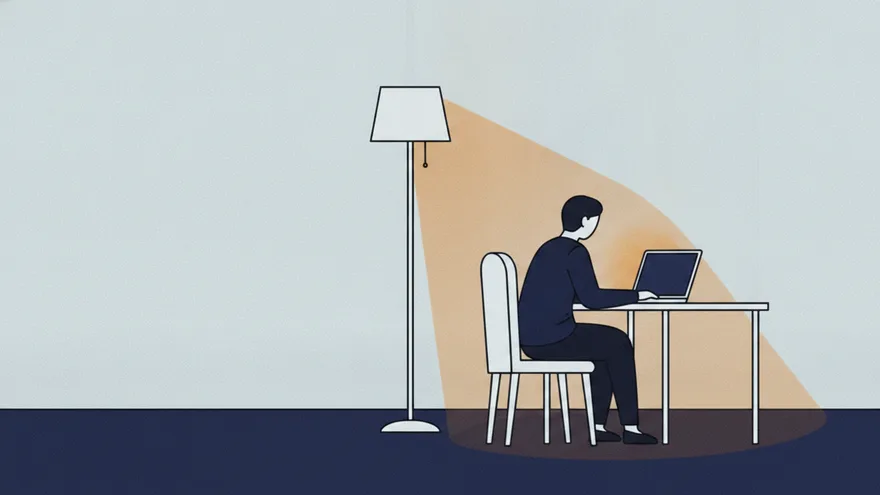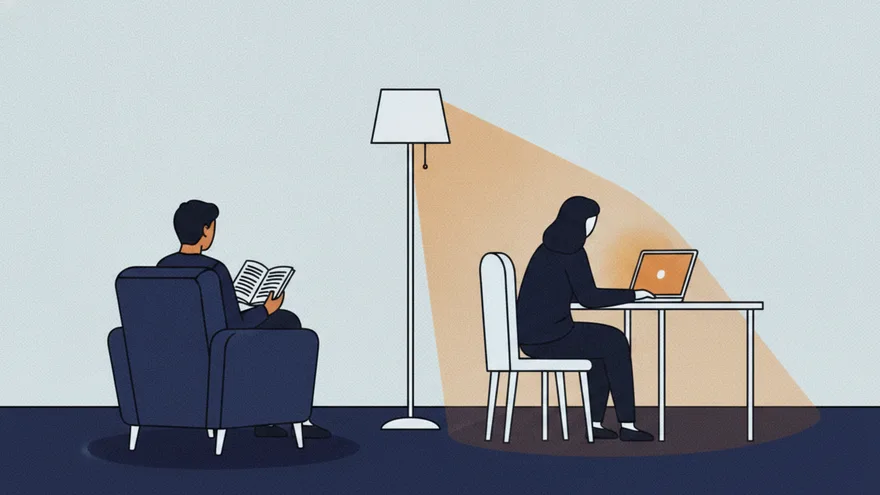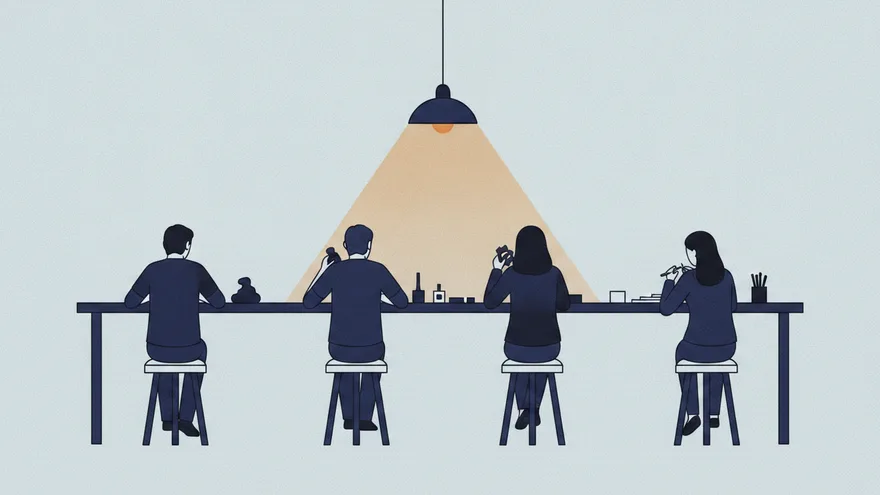
- Noisehow much competing sound and crowd
- low
- Durationhow long the format expects you to stay
- low
- Exit costhow awkward leaving early is
- low
- Recoveryhow much quiet it takes afterwards
- low
A cheap format helps with introversion. It does not reduce fear of being judged — that is a different problem with different answers.
Editorial estimate, not a measurement. Three steps only — low, medium, high. We publish no number on this scale because there is no number to publish.
Introvert vs shy is a comparison of two different things, not two names for one thing. The question is usually asked by someone who has been given the wrong advice for years: advice built for fear does nothing for an energy budget, and advice built for energy does nothing for fear. There is also a third thing — social anxiety disorder — which is a clinical condition that neither word covers.
What are the three different things?
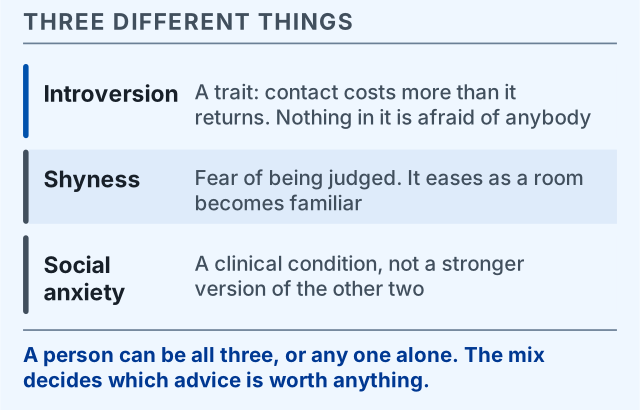
Introversion, shyness and social anxiety disorder. Introversion is the energy cost of contact: an evening can be enjoyable and still cost more than it returned. Shyness is fear of being judged, which is unpleasant while it happens rather than afterwards. Social anxiety disorder is a clinical condition, assessed and treated by a professional. The fastest way to see the difference is to ask when the difficulty happens, and what it is about.
| Introversion | Shyness | Social anxiety disorder | |
|---|---|---|---|
| What it describes | The energy cost of contact | Fear of being judged | A clinical anxiety condition |
| When it shows up | Afterwards, as depletion | During, as apprehension | Before, during and after; persistent |
| About other people? | No — you can like them and still need to leave | Yes — their evaluation | Yes — feared scrutiny, over time |
| What usually helps | Cheaper formats: shorter, quieter, fewer people | Familiarity and repeat contact with the same people | Assessment and treatment by a professional |
| Who to go to | Nobody. It is a trait, not a problem to solve | Nobody, unless it is costing you things you want | A GP or a licensed therapist |
Checked: 12 August 2026. We re-check this page every six months.
Read the row that matters: the difficulties arrive at different moments. Introversion bills you after the event. Shyness charges you during it. That single distinction sorts most of the confusion. Consider two people at the same good party: one leaves at nine perfectly happy, the other stands in the kitchen for forty minutes working up to saying hello.
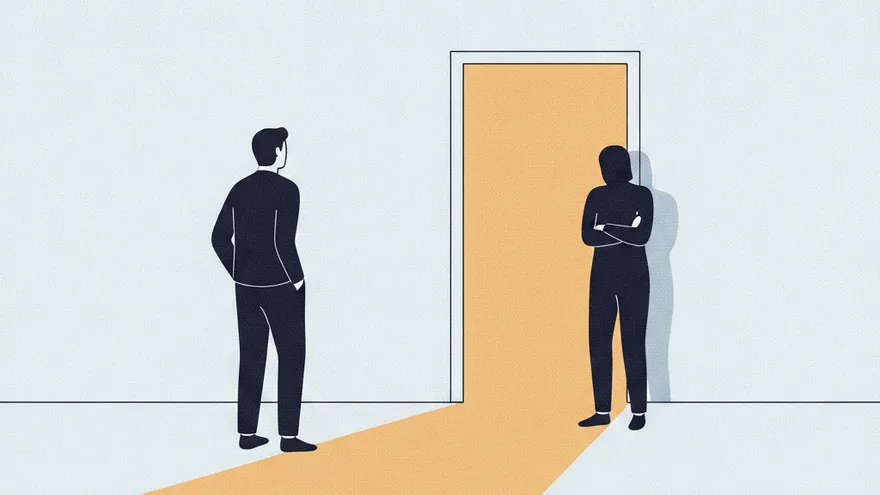
Introversion is a trait, not a type
In personality psychology, extraversion–introversion is one of five broad trait domains in the five-factor model, alongside neuroticism, openness, agreeableness and conscientiousness, as Kajonius and Johnson set out in Europe’s Journal of Psychology in 2019. The word to notice is domain. It is measured as a continuous dimension, not as two boxes.
That has a consequence people find annoying: there is no published cut-off above which a person “is” an introvert. So there is no defensible figure for how many people are introverts, and any site printing one has either dichotomised a scale or copied someone who did.
What can be quoted is self-description. In a 2023 YouGov poll of 1,000 U.S. adults, 39% described themselves as introverts. In the same YouGov poll, 31% said they were an equal mix of introvert and extrovert and 22% said they were extroverts, which is the shape you would expect from a dimension rather than a pair of categories.
Where the clinical line sits
Social anxiety disorder is a diagnosis, and a common one. An estimated 12.1% of U.S. adults experience social phobia at some point in their lives, and 7.1% had it in the past year, according to the National Comorbidity Survey Replication reported by Ruscio and colleagues in Psychological Medicine in 2008.
The National Comorbidity Survey Replication, reported by Ruscio and colleagues in Psychological Medicine in 2008, measured social anxiety disorder as a diagnosis in a nationally representative household sample — which is why it belongs with a clinician rather than with a personality label.
Who these figures describe
- At some point in their lives / In the past year — U.S. adults, nationally representative household sample
Source: National Comorbidity Survey Replication (NCS-R), reported by Ruscio and colleagues in Psychological Medicine, 2008. See how we check numbers.
Show these numbers as a table
| Group | Value | Who it describes | Source |
|---|---|---|---|
| At some point in their lives | 12.1% | U.S. adults, nationally representative household sample | National Comorbidity Survey Replication (NCS-R), reported by Ruscio and colleagues in Psychological Medicine, 2008 |
| In the past year | 7.1% | U.S. adults, nationally representative household sample | National Comorbidity Survey Replication (NCS-R), reported by Ruscio and colleagues in Psychological Medicine, 2008 |
We print those figures for one reason: to mark that this is a real, treatable condition with a professional attached to it, not a stronger flavour of being quiet. We do not print a checklist for it, and we do not tell you which side of the line you are on.
Why does it matter in dating?
Because the fix is different, and using the wrong one wastes months.
If the problem is energy, the answer is format: shorter dates, quieter rooms, one person instead of six, an exit that does not require an excuse. Where you meet people in the first place runs on the same axes — that is the argument on being a social introvert. Nothing on that list makes anyone braver, because bravery was never the missing input.
If the problem is fear of being judged, format helps only a little. What moves shyness is familiarity: the same people, repeatedly, in a setting where nobody has to perform. For example, a shy person can be silent on date one and funny on date four, which is also why dating strategies built around volume of new introductions work badly for them.
If the problem is clinical, dating advice is the wrong tool entirely, and that includes ours.
There is also a perception problem sitting on top of all three. In the 2023 YouGov poll, 70% of Americans said extroverts have more advantages than introverts at parties, against 7% who said introverts do. That measures what people believe about the room, not who does well in it — but it is a fair description of the assumptions the average dating format is designed around.
An editorial note. This site is signed with a pen name rather than a biography, so we do not publish personal stories about our own dating lives as evidence. What we can tell you is what we did here: we went looking for a number for how many people “are” introverts, could not find one that survived checking, and wrote the page without it. The absence is the finding.
If you are on the other side of this — dating someone quiet and trying to work out whether silence means fear or comfort — dating a shy guy covers the reading problem in detail.
Can you be both?
Yes, and the combination is the most common reason people get stuck.
An introvert who is also shy has two separate bills to pay. The format changes that make an evening cheaper (an hour, a quiet room, one person) do nothing about the fear of being assessed. The familiarity that dissolves the fear takes repeated contact, which costs energy. Each fix works, and each one is aimed at the other problem’s blind spot.
The practical move is to stop treating it as one condition with one answer. Ask which bill arrived. If you were fine in the moment and flattened for two days, that is the energy side. If you rehearsed the first sentence in the car park and felt fine once you were talking, that is the fear side.
About “extroverted introvert” and quizzes
Labels such as extroverted introvert, ambivert and omnivert describe real experiences and are not scientific categories. Neither is any result an extroverted introvert quiz hands you. Since extraversion is measured on a continuum rather than as two boxes, “I am somewhere in the middle” is a coherent thing to say about yourself — but how the population is distributed along that dimension is a separate question, and we have not found a source that answers it.
MBTI type codes belong in the same bucket. They are a popular vocabulary. They are not the measurement model personality research runs on, and we do not use them to describe anyone here.
The thing nobody can measure
“Social battery” is a metaphor and it is a good one, but it is not a measured quantity. There is no validated scale, no published norm and no unit, so nobody can tell you the size of yours or how fast it drains. There is also no data on how long recovery takes after social contact — every number in circulation for that comes from blogs, not measurement.
We still use the language, because it describes something people recognise. We just do not attach figures to it. What a social battery is sets out what the metaphor covers, and what it does not: there is no measured capacity and no published norm to compare yourself against.
Where does this site stop?
It stops at the clinical boundary, and at anything that would mean assessing you. Some things we will not do, and it is worth saying which:
- We do not diagnose. No self-assessment for social anxiety disorder, no “you might have” framing, no symptom checklist. That assessment is a clinician’s job and doing it badly is worse than not doing it.
- We do not treat introversion as a defect. There is nothing here about becoming more outgoing, and there will not be. A trait is not a problem awaiting a solution.
- We do not print numbers we could not trace. The widely repeated MBTI figure for the share of the population that is introverted failed checking, so it is not on this site. The statistics page lists what passed and what we threw out, with dates.
- We do not give therapeutic advice. Where a page touches the clinical boundary, it points at a professional and stops.
If fear of social situations is persistent and it is costing you work, study or relationships, the useful next step is a GP or a licensed therapist, not a dating article. That is not a brush- off. It is the difference between the two problems being genuinely useful information: one of them has treatment, and the other one does not need any.
For everything that is about energy rather than fear, start at dating as an introvert, which is the hub this page sits under.