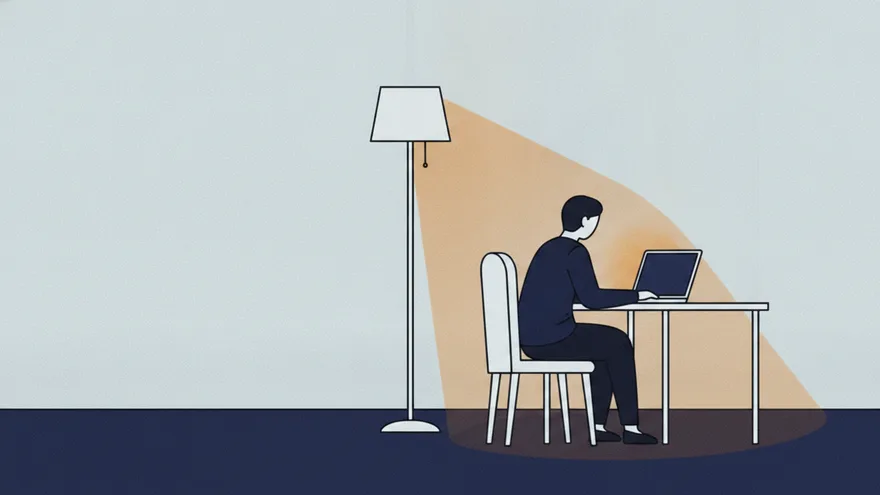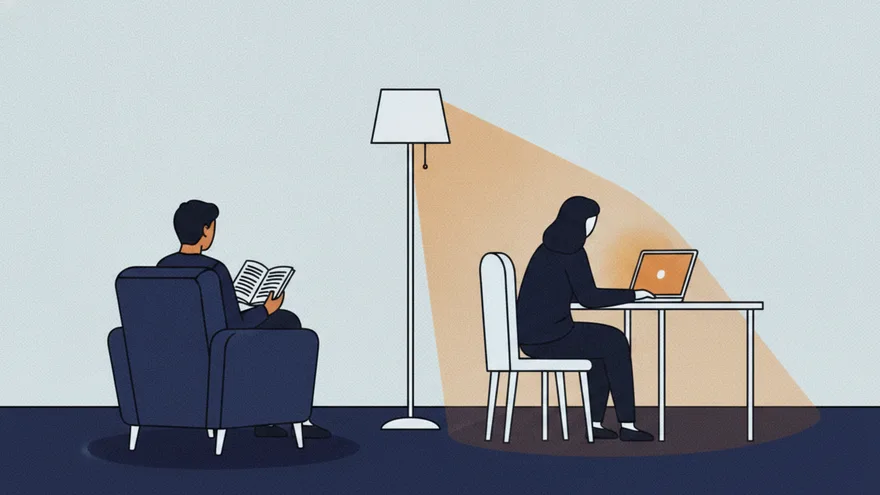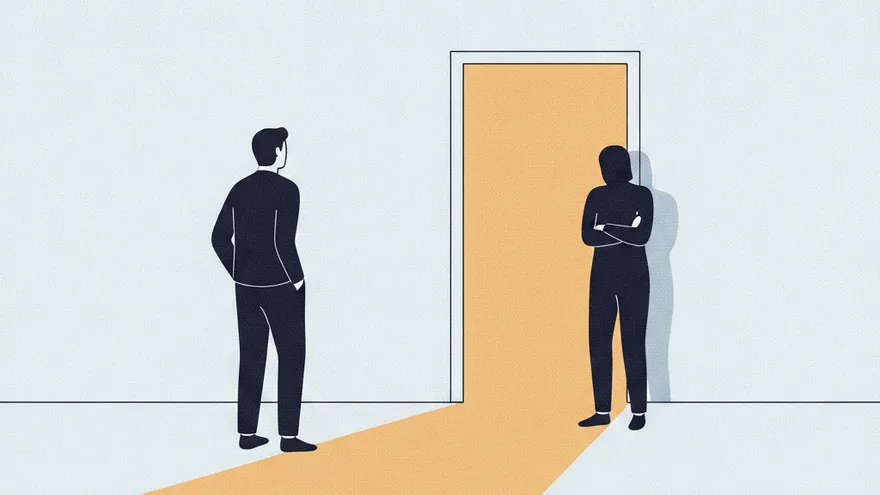
- Noisehow much competing sound and crowd
- low
- Durationhow long the format expects you to stay
- medium
- Exit costhow awkward leaving early is
- medium
- Recoveryhow much quiet it takes afterwards
- low
Familiar rooms do the work that reassurance can't. Ordinal editorial estimate, not a measurement.
Editorial estimate, not a measurement. Three steps only — low, medium, high. We publish no number on this scale because there is no number to publish.
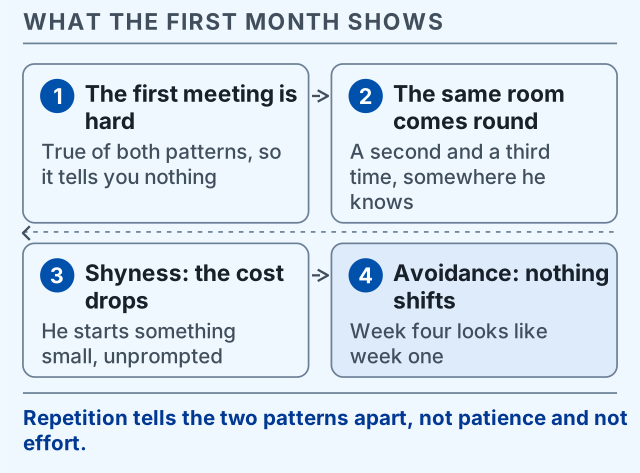
What it takes to date a shy guy is patience aimed at the right question: not how quiet he is, but whether the quiet is moving. Shyness eases as familiarity builds; introversion does not need to ease, because it is not fear; avoidance stays put no matter how safe you make the room. Those three look identical on a first meeting and separate over a month.
Is he shy, introverted, or avoidant?
The three get used as synonyms and they are not: one is a temperament trait, one is a fear, and one is a pattern of withdrawal.
Introversion is a temperament trait — in personality research, extraversion and introversion form one of five broad trait domains in the five-factor model, alongside neuroticism, openness, agreeableness and conscientiousness, as Kajonius and Johnson set out in Europe’s Journal of Psychology in 2019. It is a dimension, not a condition, and there is no line on it above which a person “is” an introvert.
Shyness is different: it is discomfort in the face of possible judgment, and it is situation-dependent. The same man can be tongue-tied at a party and fluent with two friends.
Avoidance is a pattern of withdrawal from closeness itself. It does not track familiarity, and it does not respond to you being warmer, clearer or more patient.
| What you’re seeing | Underneath it | Direction over a month | What it responds to |
|---|---|---|---|
| Introversion | A temperament trait; contact costs energy | Steady; effort is unchanged, recovery time is real | Format: fewer people, shorter meetings, quieter rooms |
| Shyness | Fear of being judged, strongest with strangers | Eases as you become familiar | Familiarity, directness, low-stakes repetition |
| Avoidance | Withdrawal from closeness, not from noise | Flat or shrinking, including with you | Nothing you can do from the outside |
Comparison written by our editors from the descriptions above, not from a diagnostic instrument. Checked on 12 August 2026.
One number people expect here does not exist: there is no published share of the population that “is” introverted, because extraversion is measured as a continuous dimension with no agreed cut-point. What exists is self-description. In a 2023 YouGov poll of 1,000 U.S. adults, 39% described themselves as introverts. That is what people call themselves, not a measurement of who they are, and it is the only honest version of that statistic.
39%
Describe themselves as introverts
YouGov (2023) asked people to place themselves on a five-point scale, so this figure is self-description rather than a validated measurement of temperament.
Who these figures describe
- 1,000 U.S. adult citizens
Source: YouGov, 2023. See how we check numbers.
Show these numbers as a table
| Group | Value | Who it describes | Source |
|---|---|---|---|
| Describe themselves as introverts | 39% | 1,000 U.S. adult citizens | YouGov, 2023 |
The clinical boundary is a separate matter, and it is the one place where the labels stop being a matter of style. Social anxiety disorder is a diagnosis: the National Comorbidity Survey Replication, reported by Ruscio and colleagues in Psychological Medicine in 2008, estimated that 12.1% of U.S. adults experience social phobia at some point in their lives. That is not a severe version of being quiet. It is a different thing with its own treatment, and neither you nor this page is in a position to diagnose it.
What does the first month look like?
It looks like a direction rather than a mood: read behaviour that costs something, and read it in sequence rather than one instance at a time.
Initiation after a gap. The single most informative signal. Anyone can reply. Someone who starts contact again three days later, without a prompt, has spent effort.
Specificity. Nervous-but-interested answers get longer and more detailed as weeks pass. Uninterested answers stay the same length in week five as in week one.
Follow-through on his own plans. A plan he proposed and kept is worth more than five plans he agreed to.
Change by setting. Shyness is setting-dependent, so it should visibly lift somewhere, such as at his flat, in a familiar café, or on a walk with no third person present. If nothing changes anywhere, the setting was never the problem.
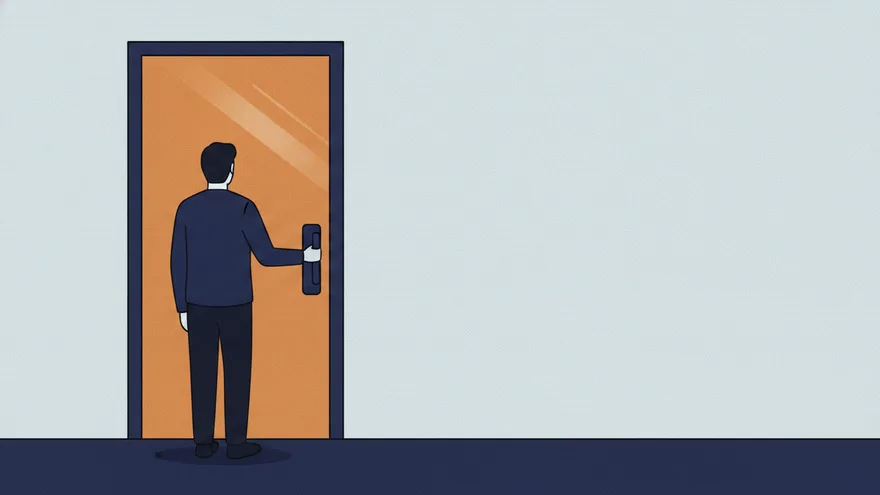
What you cannot read: what he is feeling in a silence. The whole genre of “shy guy body language” sells certainty that nobody has. For example, crossed arms and short answers describe nervousness around anyone, including a colleague he does not like. The behaviours that carry information are the ones that cost him something and repeat: initiating again after a gap, remembering specifics, arranging the next meeting.
Our rule in the first month: count the moves he makes, not the moods you infer. Inference is where people spend six months waiting for a man who was never going to arrive — and also where they abandon one who was moving, slowly, the whole time.
What helps, and what backfires?
What helps reduces ambiguity; what backfires increases exposure. Most advice on this query is written for a scenario at school, and adults have a simpler set of levers than that.
What helps
- Propose specifics: a place, a day, a length. Open questions (“what do you want to do?”) are the most expensive sentence you can send a shy man.
- Keep early meetings one-to-one. Groups multiply the number of people he is monitoring.
- Repeat a setting instead of varying it. Second and third meetings in the same place spend their novelty on the person, not the room.
- Say your interest in plain words. Being read is harder work than being told.
- State the exit in advance — “I have about an hour” — so a short meeting is a format, not a verdict.
What we don’t recommend
- Surprise parties, group introductions and “just show up” plans. Presented as generosity, received as an ambush. A room of your friends is a test he did not agree to sit.
- Treating shyness as a project. He is not a renovation. Advice that frames a partner as something to be improved reliably produces a partner who performs improvement.
- Public pressure to speak. Prompting someone to “tell everyone that story” in a group is the specific move that makes the next group harder.
- Reading silence as rejection, or as devotion. It is neither by default. Both readings are you writing his script for him.
- Any advice that requires you to withhold. Deliberate slow replies and manufactured jealousy are aimed at anxious people, which is exactly who they damage.
The perception gap around all of this is real and measured. In the same 2023 YouGov poll, 70% of Americans said extroverts have more advantages than introverts at parties, against 7% who said introverts do. That measures public opinion rather than outcomes, but it explains the pressure: quiet men are widely assumed to be losing, and a lot of dating advice is written to fix a deficit that the format created.
A related caution: “social battery” is a metaphor, not a measured quantity. There is no scale, no norm and no published recovery time after contact, so any figure claiming to tell you how long he needs after a party was invented. We explain what the metaphor is good for, and where it stops, in our social battery hub.
When does patience stop being the answer?
Patience is a good bet against shyness and a bad bet against avoidance, and the tell is direction, not speed.
Stop waiting when, over four to six weeks of easy, low-pressure contact, none of the following has moved: he never initiates, plans only ever come from you, answers stay short in every setting, and closeness gets shorter rather than longer after a good meeting. That last one — warmth followed by retreat — is the pattern that patience does not fix, and it is not what you came here to solve.
Also stop reading it as shyness if what you are seeing is fear at the level of impairment, such as avoiding necessary things, physical symptoms, or distress that persists in safe settings. Social anxiety disorder is treatable and common — the same National Comorbidity Survey Replication estimated that 7.1% of U.S. adults had social phobia in the past year — and the person to take it to is a clinician, not a partner and not a dating site. We do not give therapeutic advice here, and we will not pretend the boundary is blurry.
The reverse mistake is just as common: leaving in week two because a nervous man was nervous. Give the format a fair chance before you give the person a verdict. The difference between those two decisions is roughly one month of paying attention to moves rather than moods.
Where to go next
- The trait-versus-fear distinction in full: introvert vs shy
- Where the meeting happens in the first place: being a social introvert
- What changes once it is actually a relationship: introvert relationships
- The rest of the dating hub, including apps and first dates: dating as an introvert
- What the data does and does not say about introverts and dating: our statistics page